News
economicempowermentmuslimcommunitydevelopmentmiddleeastyouthsummityouthbreaktheboundariesEconomic Empowerment as a Pillar of Muslim Community Development
Middle East Youth Summit 2025 - Aug 19, 2025
Economic empowerment plays a critical role in the development and resilience of Muslim communities worldwide. It goes beyond financial independence, fostering…
Full announcement
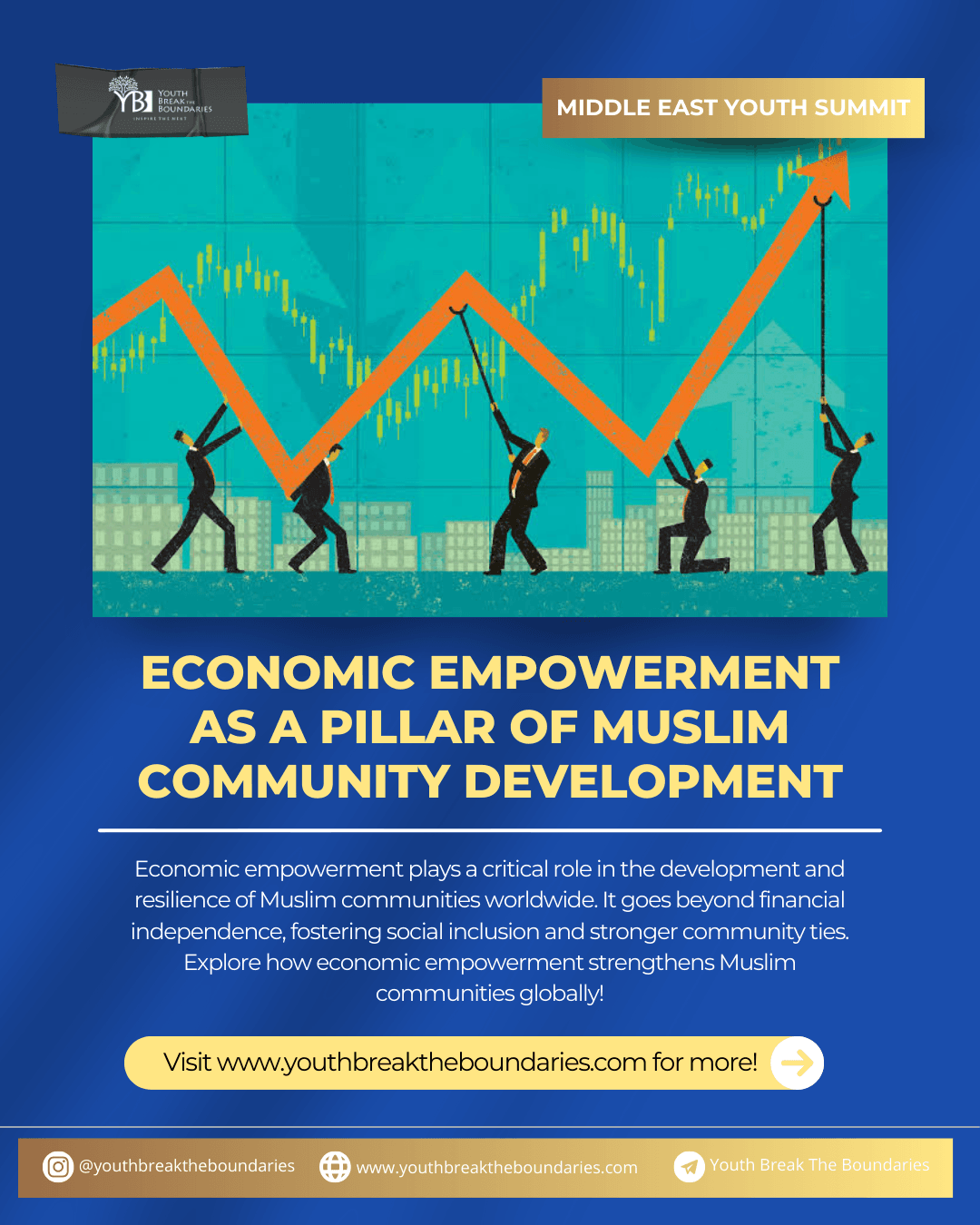
Economic empowerment plays a critical role in the development and resilience of Muslim communities worldwide. It goes beyond financial independence, fostering social inclusion and stronger community ties.
When Muslim individuals gain access to opportunities, education, and resources, they actively contribute to a more vibrant and sustainable society.
For you who are passionate about community progress, understanding the mechanisms behind economic empowerment is essential.
The Importance of Economic Empowerment in Muslim Communities
Economic empowerment gives individuals the tools and confidence to manage their financial resources and create opportunities for future generations.
For Muslim communities, this means not only increasing income levels but also addressing social and systemic barriers.
Empowering members economically helps reduce poverty, increases access to quality education, and encourages entrepreneurship.
Furthermore, economic empowerment supports the preservation of cultural and religious values by enabling self-reliance rather than dependence on external assistance.
This balance strengthens the identity and autonomy of Muslim communities worldwide.
Key Strategies for Economic Empowerment
To build strong Muslim communities through economic empowerment, several strategies have proven effective:
- Education and Skills Training
Providing access to vocational training and financial literacy programs equips community members with the necessary skills to enter new markets or improve their job prospects.
- Promoting Entrepreneurship
Encouraging startups and small businesses within Muslim communities helps create jobs and stimulates local economies. This requires creating supportive environments, such as microfinance options and mentorship programs.
- Access to Markets and Networks
Connecting Muslim entrepreneurs with global markets and business networks expands their opportunities and resources. Collaborations across communities foster knowledge sharing and innovation.
- Inclusive Financial Services
Islamic finance principles can guide the development of banking and investment products tailored to Muslim needs. This approach respects cultural values while promoting financial inclusion.
Overcoming Challenges to Economic Development
Despite the benefits, several challenges still hinder economic empowerment in Muslim communities.
You may notice limited access to capital, educational disparities, and sometimes discrimination in the broader market.
Addressing these barriers requires a multifaceted effort involving the government, NGOs, and community leaders.
Policies should focus on reducing educational barriers, promoting an inclusive business environment, and ensuring equitable economic participation.
Social attitudes also play a role in encouraging community members, especially youth and women. They must be involved in economic activities to foster broader empowerment and long-term growth.
The Role of Youth in Economic Empowerment
Youth represents a vital engine for change in Muslim communities. Empowering young people with knowledge, skills, and opportunities creates ripple effects that reach future generations.
Programs like Youth Break the Boundaries (YBB) are designed to ignite this potential. By connecting young Muslims around the world through initiatives such as the Middle East Youth Summit, these programs foster leadership and economic innovation.
You, especially if you are young or involved in community work, have a crucial role in shaping the direction of economic empowerment by participating in such networks and initiatives.
Conclusion
Economic empowerment stands as a cornerstone for Muslim community development. It fosters financial independence, enhances social cohesion, and preserves cultural identity.
By adopting education, entrepreneurship, and inclusive financial practices, communities position themselves for sustained growth.
You are invited to join this movement by engaging with programs like Youth Break the Boundaries, which open doors for young Muslim leaders worldwide. The Middle East Youth Summit, for example, provides a valuable platform for you to connect, learn, and contribute.
Together, building empowered communities begins with supporting economic development today—for a stronger Muslim world tomorrow.